Bridging the gap between Radio wave and Light by Terahertz
|
Jun-ichi Nishizawa President, Tokyo Metropolitan University |
|
Terahertz has been the last dark space in electro-magnetic wave. Extension of available frequency started from 1888 by Heinrich Rudolf Hertz following the expectation by James Clerk Maxwell 1864 and now I can say wave can be generated based on the idea of laser applied April 1957 by myself, till visible light from very low frequency.
It can be used as an original capital for the communication and most interesting was the application of the THz wave to detect the specified molecule and bonding, specialty is the organic molecule including bacterium and virus.
Our group generated 12.1THz in 1983 and now we can generate any frequency proposed over visible optical frequency and Q was more than 1M at the frequency of 2.74THz and we succeeded to measure the crystalline or molecular defect, first over the world. This would be the most expected method for prevention of epidemics; detection of bacterium and virus, study the molecular structure of these, finding the medicals specified to diminish the harm in structure and finally dope with these.
|
Jun-ichi Nishizawa
President,Tokyo Metropolitan University
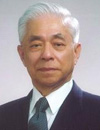 Prof. Nishizawa was born in Sendai, Japan, on 1926. He received B.S. and Ph.D. degrees from Tohoku University in 1948 and 1960, respectively. Following a year as a Research Assistant, he became an Assistant Professor in 1954 and a Professor in 1962. He served during the terms of 1983-1986 and 1989-1990 as the Director of the Research Institute of Electrical Communication, Tohoku University, and 1990-1996 as the President of Tohoku University. After that, during 1998-2005(Mar.) he served as the President of Iwate Prefectural University. From April 2005, he is the President of Tokyo Metropolitan University. He is also Member of the Japan Academy. He is awarded Japan Academy Prize, IEEE(Institute of Electrical & Electronics Engineers, USA) Jack A. Morton Award, Honda Prize, The Order of Cultural Merits (Bunka-Kunsho), IEEE Edison Medal and First Order of Merit. Finally, IEEE established Jun-ichi Nishizawa Medal in 2002 in honor of his works (ranging from fundamental semiconductor materials and devices through optical communication and power systems).
|
| >> Program |